

Introduction
A transformer is one of the most important components of an industrial electrical system. It helps transfer electrical energy between circuits while changing voltage levels to meet the requirements of industrial equipment, machinery, distribution systems, and other electrical loads.
For factories, commercial facilities, infrastructure projects, and large electrical installations, proper transformer installation is essential for reliable power distribution and safe operation. A transformer that is correctly selected, transported, installed, tested, and commissioned can support stable electrical performance and long-term operation.
Transformer installation in Kerala requires careful planning because every project has different electrical loads, site conditions, equipment specifications, statutory requirements, and safety considerations. The installation process should therefore be handled by qualified electrical professionals and carried out according to the manufacturer's instructions and applicable electrical requirements. Schneider Electric, for example, states that transformer installation and commissioning should be performed by qualified personnel and that recommended pre-commissioning checks should be completed before energisation.
RICOHMS provides electrical and power infrastructure solutions across Kerala, including transformer installation, HT/LT electrical installations, cable works, substations, electrical equipment installation, and maintenance services.
In this guide, we explain the major stages involved in industrial transformer installation.
What Is a Transformer?
A transformer is an electrical device used to transfer electrical energy from one circuit to another through electromagnetic induction. Depending on the application, a transformer can increase or decrease voltage.
In industrial electrical systems, transformers are commonly used to:
- Reduce incoming voltage to usable levels
- Supply power to industrial machinery
- Support factory electrical distribution
- Connect different voltage levels
- Improve the efficiency of power transmission and distribution
- Provide power for commercial and infrastructure facilities
Transformers are available in different ratings, configurations, cooling systems, and applications. The appropriate transformer must be selected according to the electrical design, expected load, voltage requirements, installation environment, and project specifications.
Why Proper Transformer Installation Is Important
Transformer installation is not simply about placing the equipment on a foundation and connecting cables. It involves multiple engineering and safety steps.
A properly planned installation can help ensure:
1. Reliable Power Distribution
Correct transformer installation helps provide a stable electrical supply to connected loads.
2. Equipment Safety
Correct clearances, earthing, cable connections, protection systems, and testing help reduce electrical risks.
3. Better Equipment Performance
A transformer installed according to its design requirements can operate within its specified conditions.
4. Long-Term Reliability
Proper installation and commissioning can help identify installation problems before the transformer is energised.
5. Compliance
Industrial electrical installations may require compliance with applicable technical and safety requirements. In India, the Central Electricity Authority publishes technical and safety regulations for electrical plants and lines, including requirements relevant to construction, operation, and maintenance.
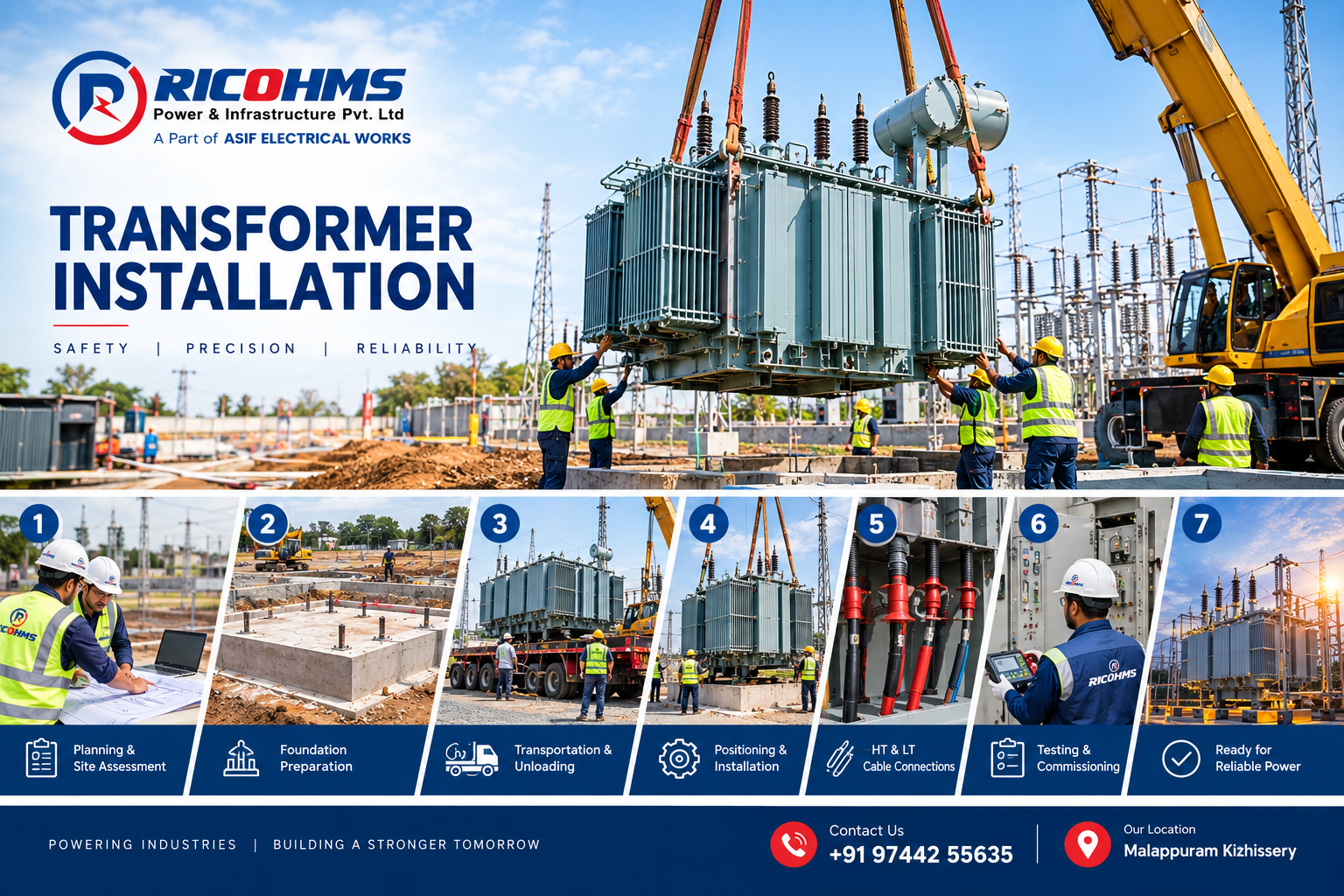
Step-by-Step Transformer Installation Process
Step 1: Understanding the Electrical Requirement
The first stage is to understand the project's electrical requirement.
Before selecting or installing a transformer, engineers generally review factors such as:
- Connected load
- Maximum demand
- Primary voltage
- Secondary voltage
- Transformer capacity
- Frequency
- Load characteristics
- Future expansion requirements
- Installation environment
- Protection requirements
- Cable and switchgear requirements
The transformer rating should match the electrical design and expected operating conditions.
The manufacturer's documentation and nameplate information are important references during installation. Manufacturer guidance commonly recommends checking the transformer nameplate against the project drawings and specifications before installation.
Step 2: Site Inspection and Planning
Once the transformer requirements are established, the installation location needs to be inspected.
The electrical team evaluates:
- Available installation space
- Foundation condition
- Access for transportation
- Crane access
- Cable routing
- Earthing arrangements
- Ventilation
- Fire safety provisions
- Required electrical clearances
- Drainage and environmental conditions
- Location of associated switchgear
For larger industrial transformers, transportation and lifting arrangements must be planned before the equipment reaches the site.
The installation area should also provide sufficient space for inspection, maintenance, and safe operation.
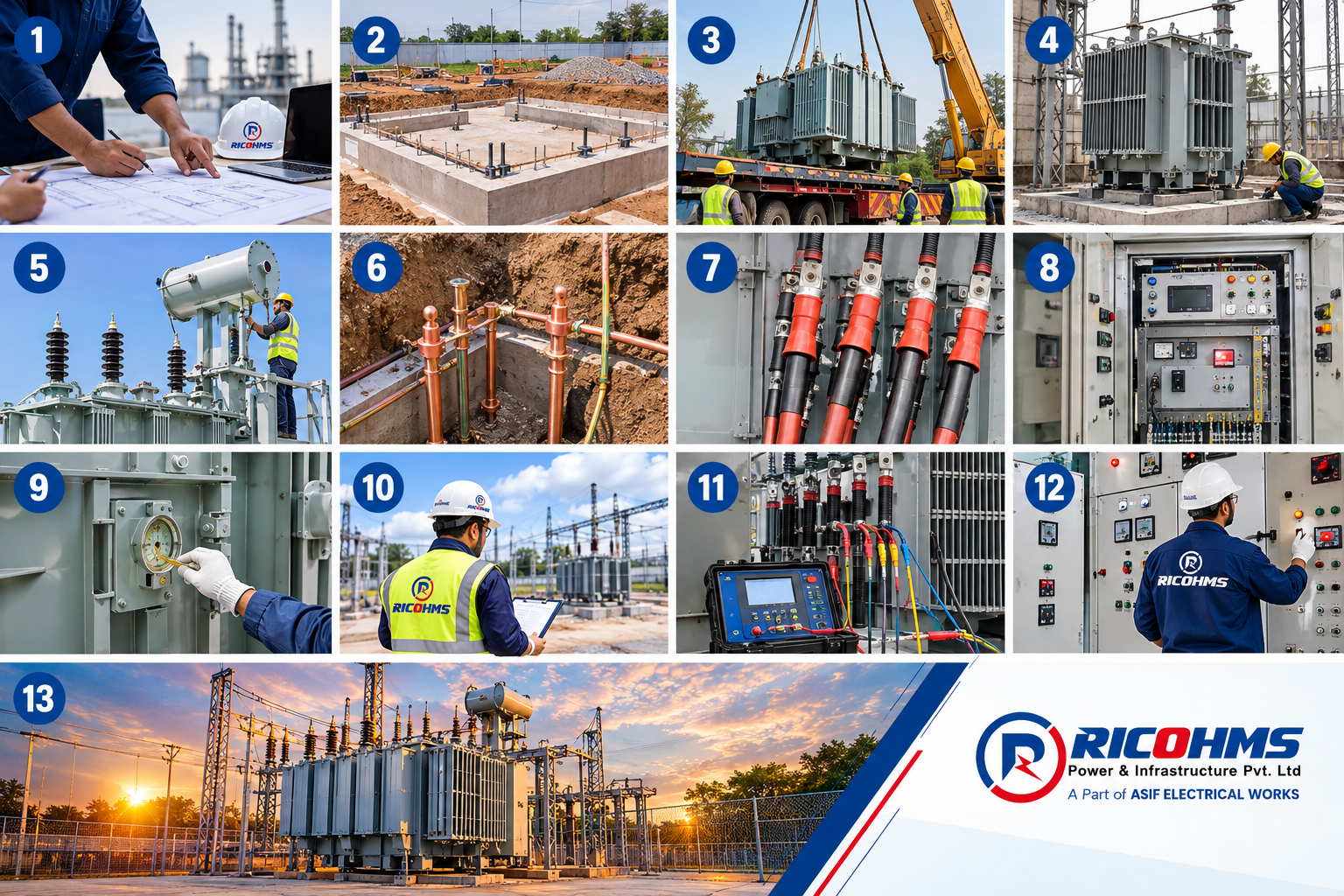
Step 3: Preparing the Transformer Foundation
The transformer must be installed on a suitable foundation designed for its size and weight.
Foundation preparation can include:
- Civil foundation work
- Level checking
- Anchor arrangements where required
- Equipment positioning points
- Cable entry arrangements
- Oil containment arrangements where applicable
- Drainage provisions
- Access and maintenance clearance
The foundation should be completed and inspected before the transformer is positioned.
For large transformers, the foundation and lifting arrangements are particularly important because the equipment can be heavy and may require specialised handling equipment.
Step 4: Transformer Transportation and Unloading
Transformers need careful handling during transportation.
The installation team should inspect the equipment when it reaches the project site for signs of:
- Physical damage
- Leakage
- Damaged accessories
- Broken components
- Packaging damage
- Missing equipment
- Transportation-related issues
The transformer should then be moved to the installation location using suitable lifting and handling equipment.
For major erection activities, the Central Electricity Authority's transformer manual specifies appropriate crane capacity and boom size for major components such as bushings, conservators, and radiators. It also stresses the use of trained personnel and appropriate PPE.
Step 5: Positioning the Transformer
After transportation, the transformer is carefully positioned on its foundation.
The installation team checks:
- Transformer alignment
- Foundation level
- Orientation
- Mounting arrangements
- Required clearances
- Accessibility of terminals
- Cable entry points
- Connection locations
The transformer should be positioned according to the approved project drawings and manufacturer's installation instructions.
Improper positioning can create difficulties during cable connection, maintenance, ventilation, or future inspection.
Step 6: Installation of Transformer Accessories
Depending on the transformer type, different accessories may need to be installed or checked.
These can include:
- Bushings
- Conservator
- Radiators
- Breather
- Buchholz relay
- Temperature indicators
- Oil level indicators
- Pressure relief devices
- Control wiring
- Protection devices
- Marshalling box
- Cooling equipment
The exact accessories depend on the transformer design and manufacturer.
All components should be installed according to the manufacturer's instructions rather than using a generic installation procedure.
Step 7: Earthing Installation
Earthing is an essential part of an industrial transformer installation.
The transformer body and relevant electrical systems need appropriate earthing arrangements according to the approved electrical design and applicable requirements.
Proper earthing provides a controlled path for fault currents and supports the operation of protective systems.
The installation team may inspect:
- Transformer body earthing
- Neutral earthing where applicable
- Earth connections
- Earth conductors
- Earth pits or electrodes
- Connection tightness
- Continuity
The Central Electricity Authority's transformer guidance includes the use of approved and tested earth rods and requires electrical equipment used during erection activities to be earthed.
Step 8: HT and LT Cable Connections
After positioning and earthing, electrical connections are completed.
Depending on the installation, this can include:
HT Side
- HT cable connection
- Cable termination
- Cable glands
- Cable lugs
- Stress control components
- Insulation systems
- Connection to HT switchgear
LT Side
- LT cable connection
- Busbar connections
- Cable termination
- Panel connections
- Distribution connections
All cable sizes and connection arrangements should follow the approved electrical design.
Cable termination is especially important in HT systems because poor termination can affect insulation performance and system reliability.
Step 9: Installation of Protection Systems
A transformer needs suitable protection to help detect and isolate abnormal electrical conditions.
Depending on the transformer and installation, protection can include:
- Circuit breakers
- Fuses
- Overcurrent protection
- Earth fault protection
- Differential protection
- Temperature protection
- Oil level monitoring
- Pressure protection
- Buchholz protection
- Surge protection
The exact protection scheme depends on transformer capacity, voltage level, system configuration, and project requirements.
Protection settings should be coordinated with the overall electrical system.
Step 10: Oil Inspection and Related Checks
For oil-filled transformers, transformer oil plays an important role in insulation and cooling.
Before commissioning, the installation team may inspect:
- Oil level
- Oil leakage
- Oil condition
- Breather condition
- Conservator
- Valves
- Radiators
- Sealing arrangements
Oil-related procedures must be performed according to the transformer manufacturer's instructions.
The CEA transformer manual also highlights precautions relating to oil handling, fire safety, oil leakage, and pre-commissioning checks.
Step 11: Pre-Commissioning Inspection
Before energising the transformer, a detailed inspection is carried out.
Typical checks can include:
- Visual inspection
- Mechanical inspection
- Cable connection inspection
- Earthing inspection
- Terminal inspection
- Protection system inspection
- Oil level inspection
- Bushing inspection
- Control wiring inspection
- Nameplate verification
- Tightness of connections
- Clearance verification
For dry-type transformers, manufacturer guidance also recommends checking physical condition, nameplate information, tap settings, connection tightness, and grounding/bonding before energisation.
Step 12: Electrical Testing
Electrical testing is one of the most important stages of transformer installation.
Depending on transformer type and project requirements, testing may include:
Insulation Resistance Test
This test helps assess the insulation condition of the transformer windings and associated circuits.
Winding Resistance Test
This test helps identify abnormalities in winding resistance and connections.
Transformer Turns Ratio Test
The turns ratio is checked against the expected transformer ratio.
Earth Continuity Test
Earthing connections are checked for continuity.
Oil Tests
For oil-filled transformers, relevant oil tests may be performed according to the equipment type and project requirements.
Protection Testing
Protection devices and associated control circuits are checked before energisation.
The exact test schedule should be developed according to the transformer manufacturer, project specifications, applicable standards, and the electrical system design.
Step 13: Final Commissioning
After installation and testing are completed, the transformer can proceed toward commissioning.
Commissioning normally involves confirming that:
- Installation is complete
- Test results are acceptable
- Protection systems are functional
- Earthing is complete
- Cable connections are correct
- Required documentation is available
- Safety requirements are satisfied
- The installation is ready for energisation
The CEA transformer manual specifically calls for pre-commissioning tests and final commissioning checks before energising a transformer.
Only authorised and qualified personnel should perform energisation and commissioning activities.
Step 14: Energising the Transformer
Once all required checks have been completed, the transformer can be energised according to the approved commissioning procedure.
The team monitors the transformer during initial operation for abnormal conditions such as:
- Unusual noise
- Excessive temperature
- Oil leakage
- Abnormal indications
- Protection alarms
- Voltage abnormalities
- Other unexpected operating conditions
The transformer should be observed during the initial operating period to confirm that it is functioning as expected.
Common Transformer Installation Challenges
Industrial transformer projects can face several challenges.
1. Poor Site Preparation
An inadequate foundation or insufficient installation space can create difficulties during installation and maintenance.
2. Incorrect Cable Selection
Cable size and type must be appropriate for the electrical load, voltage, installation method, and project design.
3. Improper Earthing
Poor earthing can compromise electrical safety and protection-system performance.
4. Inadequate Testing
Skipping required tests can allow installation problems to remain undetected before energisation.
5. Poor Cable Termination
Incorrect HT cable termination can affect insulation performance and reliability.
6. Improper Handling
Transformers can be damaged if lifting, transportation, or positioning is not properly planned.
7. Lack of Maintenance Planning
A transformer installation should also consider future inspection and maintenance access.
Transformer Installation Safety
Safety should remain a priority throughout the installation process.
Transformer installation involves high-voltage electrical equipment and potentially significant mechanical and fire hazards. Work should therefore be performed by qualified personnel using appropriate procedures and PPE.
Important safety practices include:
- Use trained and competent personnel
- Follow the manufacturer's instructions
- Isolate electrical supplies before working
- Verify electrical isolation using suitable procedures
- Use appropriate PPE
- Maintain safe working distances
- Provide suitable fire protection
- Keep unauthorised people away from the work area
- Use correctly rated lifting equipment
- Maintain proper earthing
- Complete required testing before energisation
The CEA transformer manual specifically recommends PPE, adequate lighting, work-area barricading, fire extinguishers, tested earth rods, and qualified workers.
Schneider Electric likewise states that installation, wiring, testing, and service should be performed according to applicable electrical codes and that appropriate electrical safety practices and PPE should be used.
Transformer Installation in Kerala: What Industries Should Consider
When planning transformer installation in Kerala, industries should consider more than transformer capacity alone.
The project should take into account:
Industrial Load Requirements
The transformer should be selected according to present and expected future loads.
Site Conditions
The installation environment, access, ventilation, drainage, and available space should be evaluated.
Electrical Infrastructure
Transformer installation often needs to be coordinated with HT/LT panels, switchgear, cables, protection systems, earthing, and other equipment.
Documentation
Depending on the project and voltage level, relevant approvals, inspections, documentation, and statutory procedures may apply.
The CEA provides technical standards for electrical plants and electric lines and publishes safety requirements for construction, operation, and maintenance.
Maintenance Access
The transformer should be installed in a way that allows future inspection, maintenance, testing, and servicing.
Why Choose an Experienced Electrical Contractor?
Transformer installation is part of a larger electrical infrastructure system. The transformer must work correctly with the incoming supply, HT equipment, cables, protection systems, LT distribution, earthing, and connected loads.
An experienced electrical contractor can coordinate these activities from planning through commissioning.
RICOHMS states that it provides transformer installation and electrical equipment installation services as part of its wider electrical and power infrastructure work. Its service portfolio also includes HT/LT installations, cable works, substations, generator installation and maintenance, earthing, maintenance, and panel-board and cable-tray manufacturing.
RICOHMS describes itself as a Class A Electrical Contractor in Kerala and states that it has more than 35 years of experience in industrial electrical and power infrastructure solutions.
Transformer Installation Checklist
Before considering an installation ready for commissioning, the project team can review the following checklist:
- Transformer rating verified
- Nameplate details checked
- Foundation completed
- Transformer positioned correctly
- Accessories installed
- Earthing completed
- HT connections completed
- LT connections completed
- Protection systems connected
- Cable terminations inspected
- Oil level checked where applicable
- Physical inspection completed
- Electrical tests completed
- Protection tests completed
- Required documentation completed
- Safety inspection completed
- Commissioning clearance obtained
- Transformer energised by authorised personnel
Transformer Installation and Maintenance Go Together
Installing a transformer correctly is only the beginning of its service life.
Regular maintenance can help identify potential problems before they become major failures. Depending on the transformer type and manufacturer's recommendations, maintenance activities can include inspection of:
- Oil condition
- Oil level
- Temperature
- Bushings
- Connections
- Earthing
- Protection devices
- Cooling systems
- Cable terminations
- Signs of leakage
- Abnormal noise or vibration
A maintenance schedule should be developed according to the equipment manufacturer's recommendations, operating conditions, and project requirements.
Frequently Asked Questions
1. What is transformer installation?
Transformer installation is the process of preparing the site, transporting and positioning the transformer, installing accessories, connecting HT/LT cables, completing earthing and protection systems, conducting tests, and commissioning the equipment.
2. Why is professional transformer installation important?
Professional installation helps ensure that the transformer is correctly positioned, connected, earthed, tested, and commissioned according to the project design and manufacturer's requirements.
3. How long does transformer installation take?
The duration depends on transformer capacity, site preparation, equipment type, foundation readiness, transportation, cable work, testing, approvals, and project complexity. There is no single installation duration applicable to every project.
4. What tests are performed before transformer commissioning?
Depending on the transformer and project requirements, tests can include insulation resistance, winding resistance, turns ratio, earthing/continuity, oil-related tests, and protection-system testing.
5. Is earthing required for transformer installation?
Yes. Appropriate earthing arrangements are an essential part of transformer installations and should be designed and implemented according to the applicable electrical requirements and project design. The CEA transformer guidance includes requirements concerning approved earth rods and earthing of electrical equipment used during erection.
6. Can RICOHMS handle transformer installation in Kerala?
RICOHMS lists installation of transformers and electrical equipment installation among its services, along with HT/LT installation, cable works, substations, earthing, and maintenance.
7. Where does RICOHMS provide transformer installation services?
RICOHMS states that it provides electrical and power infrastructure solutions across Kerala. Its headquarters is listed at Kizhisseri, Kuzhimanna, Malappuram, Kerala.
8. What should industries check before installing a transformer?
Industries should review the required transformer rating, load requirements, site conditions, foundation, cable routes, earthing, protection, ventilation, access for maintenance, safety requirements, and applicable approvals before installation.
Conclusion
Transformer installation is a structured process: assessing your load, choosing the right type, securing approvals, preparing the site, installing with care, earthing, testing, and commissioning. Each step protects your people, your equipment, and your production.
For businesses planning transformer installation in Kerala, local conditions such as monsoon humidity, coastal corrosion, lightning, and logistical limits add further reasons to work with experienced professionals who understand both the technology and the regulations. Invest in doing it properly the first time, and your transformer will deliver safe, efficient, and uninterrupted power for decades.
If you are planning a new facility or upgrading your power setup, consult a licensed electrical contractor, get a detailed site survey, and make sure every stage is documented and approved.