
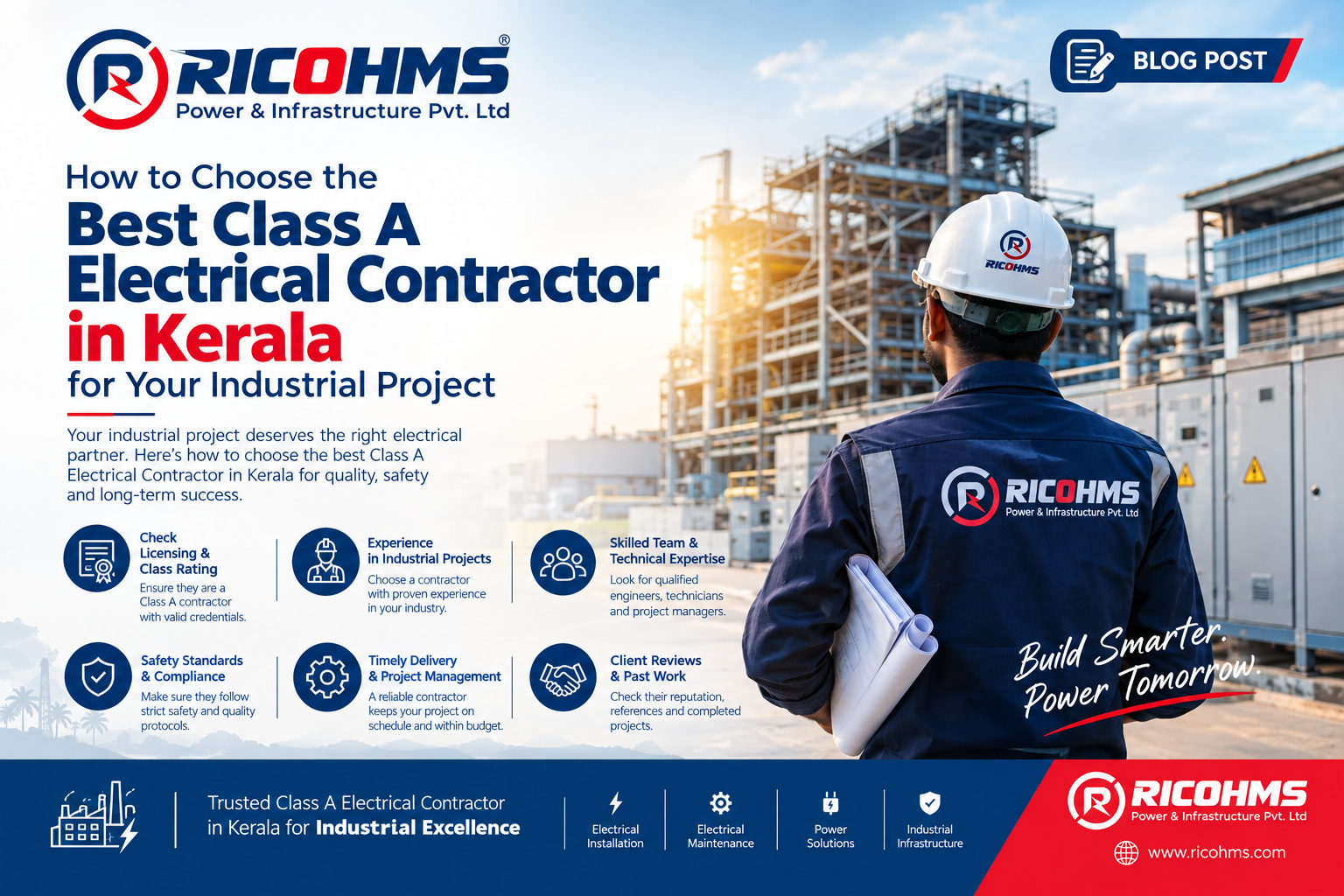

Electrical systems are one of the most important parts of any industrial project. A factory, commercial building, warehouse, hospital, shopping centre or manufacturing facility needs a safe, reliable and properly planned electrical system to operate efficiently.
From power distribution and transformers to HT/LT installation, electrical panels, cabling, earthing and maintenance, every part of the electrical infrastructure needs professional attention. A small mistake during installation can lead to equipment damage, power interruptions, safety risks and expensive repairs.
This is why choosing the right Class A Electrical Contractor in Kerala is an important decision for industrial and commercial projects.
A professional electrical contractor does more than install wires and electrical equipment. The contractor helps plan the electrical system, select suitable equipment, execute installation work, follow safety requirements, coordinate with relevant authorities and provide maintenance support when required.
In this guide, we explain the important factors you should consider before selecting an electrical contractor for your industrial project in Kerala.
What Is a Class A Electrical Contractor?
A Class A electrical contractor is a licensed electrical contractor authorised to undertake electrical works within the scope permitted by the applicable regulations and licence conditions.
Industrial electrical projects can involve high-voltage and low-voltage systems, transformers, substations, electrical panels, cables, generators, motors and other critical equipment. Such projects require proper technical knowledge, qualified personnel and a strong understanding of electrical safety.
When searching for a Class A Electrical Contractor in Kerala, businesses should not look only at the licence. Experience, technical capability, safety practices, project management and after-sales support are also important.
The right contractor should be capable of understanding your project requirements and delivering electrical work according to the project's technical specifications and applicable standards.

Why Is Choosing the Right Electrical Contractor Important?
An industrial electrical system is a long-term investment. The quality of the installation can affect the performance, safety and operating cost of a facility for many years.
A professional contractor can help you:
- Plan electrical infrastructure correctly
- Reduce installation problems
- Improve electrical safety
- Select suitable electrical equipment
- Ensure proper cable installation
- Manage HT and LT electrical works
- Install and maintain transformers
- Improve power distribution
- Reduce unexpected electrical failures
- Complete projects in a structured manner
- Maintain electrical systems after installation
On the other hand, selecting a contractor only because of a low quotation can create problems later. Poor-quality materials, improper installation, inadequate testing or weak project management can result in additional costs.
Therefore, industrial businesses should compare contractors based on experience, quality, safety, technical capability and service, rather than price alon
Why Industrial Projects Specifically Need Class A Contractors
You might wonder why the distinction matters so much for industrial work compared to, say, a residential building. The answer lies in scale, risk, and regulatory compliance.
1. Higher Voltage Requirements
Most industrial units in Kerala draw power at high tension (11 kV or above) directly from KSEB (Kerala State Electricity Board) substations. Only a Class A contractor is legally permitted to design, install, and maintain HT switchgear, transformers, and distribution panels at this voltage level.
2. Regulatory and Insurance Compliance
Industrial facilities are subject to inspections by the Chief Electrical Inspectorate, fire safety departments, and often insurance auditors. If your electrical installation was carried out by a contractor without the appropriate Class A license, you risk:
- Failed statutory inspections
- Delayed commissioning and power connection from KSEB
- Voided insurance claims in the event of an electrical fire or accident
- Legal liability in case of workplace injury
3. Complex Load Calculations
Industrial facilities often run heavy machinery, HVAC systems, compressors, and automation equipment simultaneously. Getting the load calculations wrong leads to frequent trips, voltage fluctuations, and equipment damage. Class A contractors are trained to handle these complex calculations and design systems with appropriate redundancy.
4. Long-Term Safety
Industrial electrical failures aren't just inconvenient, they can be catastrophic. Fires, explosions, and electrocution risks are all elevated in industrial settings where high currents and heavy equipment are involved. Hiring a properly licensed and experienced contractor significantly reduces these risks.
1. Check the Contractor's Licence and Credentials
The first step is to verify whether the contractor has the appropriate electrical contractor licence for the work involved.
For a major industrial project, ask the contractor about:
- Electrical contractor licence
- Relevant approvals and registrations
- Qualified technical personnel
- Experience with industrial electrical projects
- Safety procedures
- Previous project experience
A legitimate and experienced Class A Electrical Contractor in Kerala should be able to provide appropriate documentation and explain the scope of their electrical contracting services.
Do not hesitate to ask for licence details and project credentials before awarding a major contract.
2. Look for Relevant Industrial Experience
Experience matters greatly in industrial electrical projects.
A contractor who mainly handles small residential wiring projects may not have the technical experience required for a large factory, manufacturing unit or commercial facility.
Before selecting a contractor, ask:
Has the company completed projects similar to yours?
Look for experience in areas such as:
- Factories
- Manufacturing facilities
- Commercial buildings
- Warehouses
- Industrial plants
- Hospitals
- Infrastructure projects
- Power distribution systems
- Transformer installations
- Substations
- HT/LT electrical systems
A contractor with relevant experience can better understand common challenges and requirements associated with industrial electrical work.
Why project experience matters
Industrial projects often involve multiple teams working together. The electrical contractor may need to coordinate with civil contractors, mechanical teams, consultants, equipment suppliers and project managers.
An experienced contractor understands how electrical work fits into the overall construction and commissioning process.
3. Check HT and LT Electrical Capabilities
Industrial projects may require both High Tension (HT) and Low Tension (LT) electrical systems.
Depending on the project, the electrical infrastructure may include:
- HT incoming supply
- Transformers
- HT panels
- LT panels
- Distribution boards
- Power cables
- Cable trays
- Switchgear
- Protection systems
- Earthing systems
- Generator systems
When selecting an electrical contractor, check whether the company has experience with the type of HT/LT work required for your project.
A contractor with strong HT/LT capabilities can help coordinate different parts of the electrical infrastructure rather than relying heavily on multiple contractors for critical work.
4. Check Experience With Transformers and Substations
Transformers and substations are important components of many industrial power systems.
A transformer installation requires careful planning and execution. Factors such as transformer capacity, location, protection, cabling, earthing, ventilation and safety clearances need to be considered.
A suitable contractor should have experience with relevant transformer and substation works.
Ask potential contractors:
- Have you handled transformer installations before?
- Do you have experience with industrial substations?
- Can you manage associated cabling?
- How is earthing planned?
- How are testing and commissioning handled?
- Can you coordinate the complete installation?
Choosing a contractor with practical experience in these areas can make the project easier to manage.
5. Evaluate Safety Practices
Electrical safety should never be treated as an optional part of an industrial project.
Electrical work can involve high voltage, heavy equipment, live systems and complex installations. Proper safety procedures are essential for protecting workers, equipment and the facility.
Before hiring a contractor, ask about their safety practices.
Important areas include:
- Personal protective equipment
- Electrical isolation procedures
- Safe working practices
- Proper earthing
- Testing before energisation
- Cable identification
- Panel safety
- Site housekeeping
- Qualified technicians
- Risk assessment
A professional Class A Electrical Contractor in Kerala should have a clear approach to electrical safety throughout the project.
Safety should be considered during planning, installation, testing, commissioning and maintenance.
6. Review the Quality of Materials
The quality of electrical materials directly affects the reliability of the system.
Depending on the project, materials may include:
- Power cables
- Control cables
- Electrical panels
- Switchgear
- Circuit breakers
- Transformers
- Cable trays
- Earthing materials
- Distribution boards
- Electrical accessories
Ask the contractor what brands and specifications they propose to use.
The contractor should select materials based on the project's technical requirements rather than simply choosing the cheapest available option.
You should also check whether the proposed equipment meets the required technical specifications and applicable standards.
7. Understand the Project Planning Process
A good electrical project starts with proper planning.
Before installation begins, the contractor should understand:
- Connected load
- Maximum demand
- Power requirements
- Equipment requirements
- Electrical drawings
- Cable routes
- Panel locations
- Transformer requirements
- Generator requirements
- Earthing requirements
- Future expansion needs
Proper planning can help avoid costly changes during construction.
For example, if cable routes are not planned properly, the project may later require additional civil work. Similarly, insufficient provision for future expansion can make electrical upgrades more difficult.
A professional contractor should review the project requirements before beginning major installation work.
8. Ask About Testing and Commissioning
Electrical installation is not complete simply because the equipment has been installed.
Testing and commissioning are essential steps before an electrical system is put into operation.
Depending on the system, testing may include:
- Cable testing
- Insulation testing
- Earthing testing
- Panel testing
- Protection system checks
- Transformer-related checks
- Continuity checks
- Functional testing
Ask the contractor how testing and commissioning will be managed.
Proper testing helps identify potential issues before the system becomes operational.
9. Check Project Management and Communication
Industrial electrical projects can involve many activities at the same time. Good communication is therefore essential.
Your contractor should provide clear information about:
- Project schedule
- Material requirements
- Installation progress
- Testing activities
- Site requirements
- Delays
- Additional work
- Completion status
A contractor who communicates clearly can make project coordination much easier.
Before starting the project, establish who will be your main point of contact and how progress updates will be provided.
10. Compare Quotations Carefully
Price is an important factor, but it should not be the only factor.
When comparing quotations from electrical contractors, check whether each quotation includes the same scope of work.
Compare:
- Labour
- Materials
- Equipment
- Installation
- Testing
- Commissioning
- Transportation
- Documentation
- Maintenance
- Taxes
- Additional charges
A very low quotation may appear attractive initially but can become expensive if important items are excluded.
Instead of asking only “Who offers the lowest price?”, ask:
“Who offers the best value for the complete project?”
The best contractor should provide a reasonable balance of cost, quality, safety, experience and service.
11. Check Previous Projects and Client Experience
One of the best ways to evaluate an electrical contractor is to review previous projects.
Ask the company for examples of similar work they have completed.
Where possible, evaluate:
- Project size
- Type of electrical work
- Industry
- Installation quality
- Completion time
- Maintenance support
- Client feedback
Previous projects can give you a better understanding of the contractor's practical capabilities.
You can also ask existing or previous clients about their experience with the contractor.
12. Consider After-Sales Support and Maintenance
The relationship with an electrical contractor should not necessarily end after project completion.
Industrial electrical systems require regular inspection and maintenance.
Maintenance can help identify problems such as:
- Loose connections
- Cable damage
- Overheating
- Panel issues
- Earthing problems
- Equipment deterioration
- Abnormal electrical loads
Ask whether the contractor provides maintenance and troubleshooting support after installation.
A contractor who can support your electrical infrastructure after commissioning can be valuable for long-term operations.
Common Mistakes to Avoid When Choosing an Electrical Contractor
Industrial businesses should avoid several common mistakes.
Choosing only based on price
The cheapest quotation may not provide the best quality or complete scope.
Not checking credentials
Always verify the contractor's licence, experience and technical capability.
Ignoring safety
Safety should be a major selection criterion, especially for industrial electrical work.
Not checking previous projects
Previous work provides valuable evidence of practical experience.
Not defining the scope
A clear scope helps prevent misunderstandings about materials, labour and responsibilities.
Ignoring maintenance
Electrical infrastructure needs ongoing care after installation.
Selecting a contractor without relevant experience
A contractor experienced in residential projects may not necessarily have the capabilities required for complex industrial installations.
Why RICOHMS Can Be a Reliable Choice for Industrial Electrical Projects
For businesses looking for an experienced Class A Electrical Contractor in Kerala, RICOHMS Power & Infrastructure Pvt. Ltd. provides electrical and power infrastructure solutions for industrial and commercial requirements.
RICOHMS focuses on electrical contracting and power infrastructure, with services covering areas such as HT/LT electrical installations, transformer-related works, substations, electrical systems and maintenance.
With 35+ years of experience, RICOHMS brings long-term industry experience to electrical and infrastructure projects.
The company works with a focus on reliable execution, technical expertise, safety and project requirements.
For an industrial project, having one experienced electrical partner who understands the complete power infrastructure can help simplify coordination and execution.
What Should You Ask an Electrical Contractor Before Hiring Them?
Before finalising your contractor, prepare a simple checklist.
Contractor checklist
Licence
- Does the contractor have the required Class A electrical licence?
Experience
- How many years has the company been operating?
- Has it completed similar industrial projects?
Technical capability
- Can the contractor handle HT/LT systems?
- Does the team have transformer and substation experience?
Safety
- What safety procedures are followed at the site?
Materials
- Which brands and specifications will be used?
Testing
- What testing and commissioning procedures are included?
Timeline
- What is the expected project completion schedule?
Support
- Is maintenance support available after commissioning?
Quotation
- Does the quotation clearly mention the complete scope of work?
Getting clear answers to these questions can help you make a better decision.
Final Thoughts
Choosing the right electrical contractor is one of the most important decisions for an industrial project. Electrical infrastructure affects the safety, reliability and efficiency of your entire facility.
The right Class A Electrical Contractor in Kerala should offer more than a competitive quotation. You should look for proper credentials, industrial experience, technical knowledge, safety practices, quality materials, effective project management and long-term support.
Before making your final decision, compare contractors carefully and review their previous work. Make sure the scope of work is clearly defined and that testing, commissioning and maintenance requirements are understood.
If you are planning a factory, commercial building, industrial facility, power infrastructure project or electrical installation in Kerala, working with an experienced electrical contractor can help you build a safer and more reliable electrical system.